Logo

Logo
Showing posts with label Accessibility of culture in Vidzeme. Show all posts

Sunday, 10 July 2016

Laine Loze

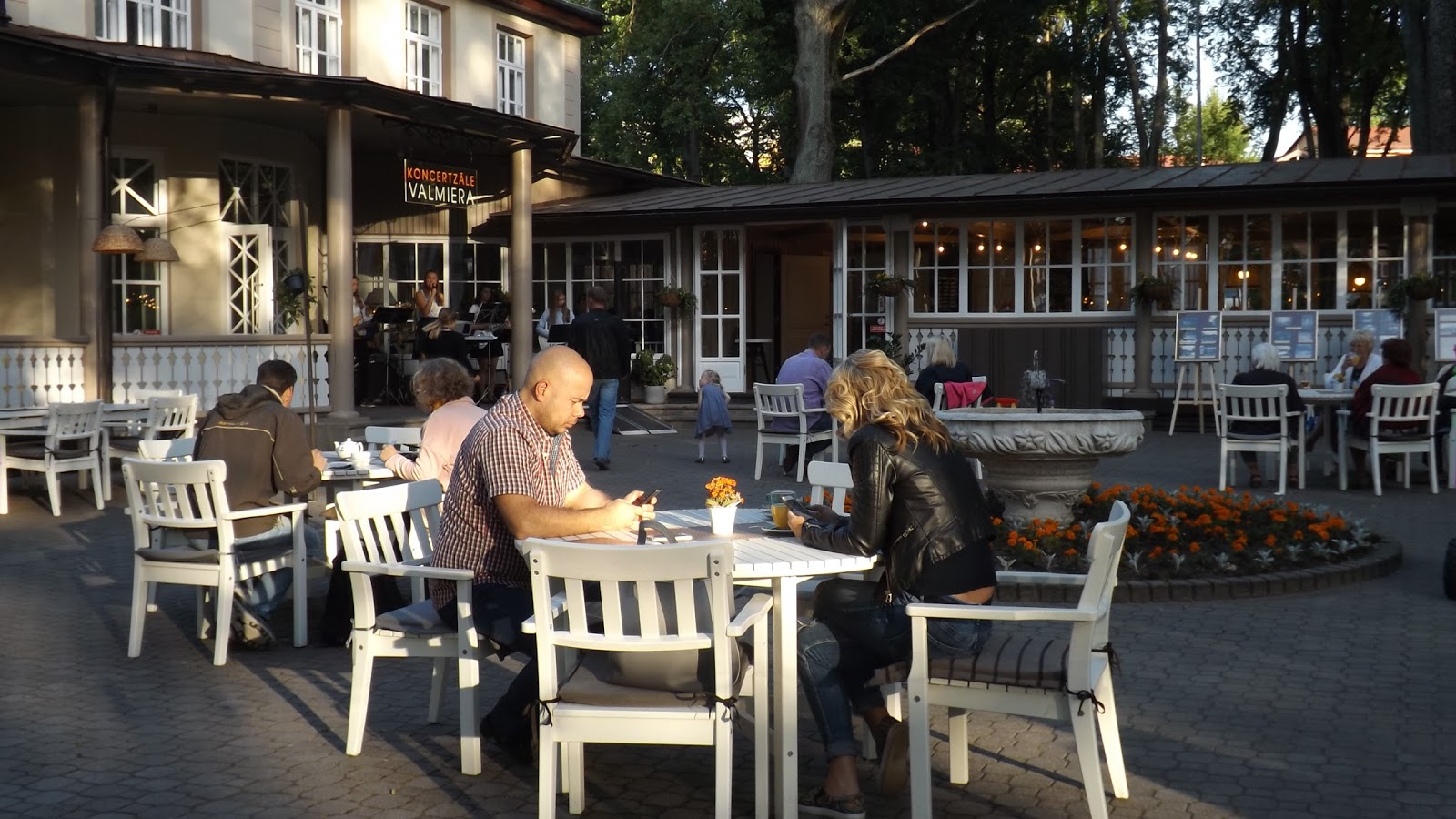
Hi everybody!  I would like to add an extra note about one thing I liked from my stay in the city of Valmiera. Recently, in the centrical park of Vespuišu there´s open a restaurant that host, as I checked the program at the entrance, several concerts each weekend, from local groups and people. Didn´t notice this place until two days ago when I was purposed to go there. And I´ve got to say, but it´s interesting and inspiring to support the will and desires of new formed group and people from the local area who wants to get to start somehow, from small but cute places such this ones. I appreciate that, as it´s an impetus for those who want to start the hard path of arts (any way of them, music included).
The name of the article is the name of the group that was performing the evening I went, by the way.


Saturday, 23 April 2016

Reports: "Aija Studio" gallery


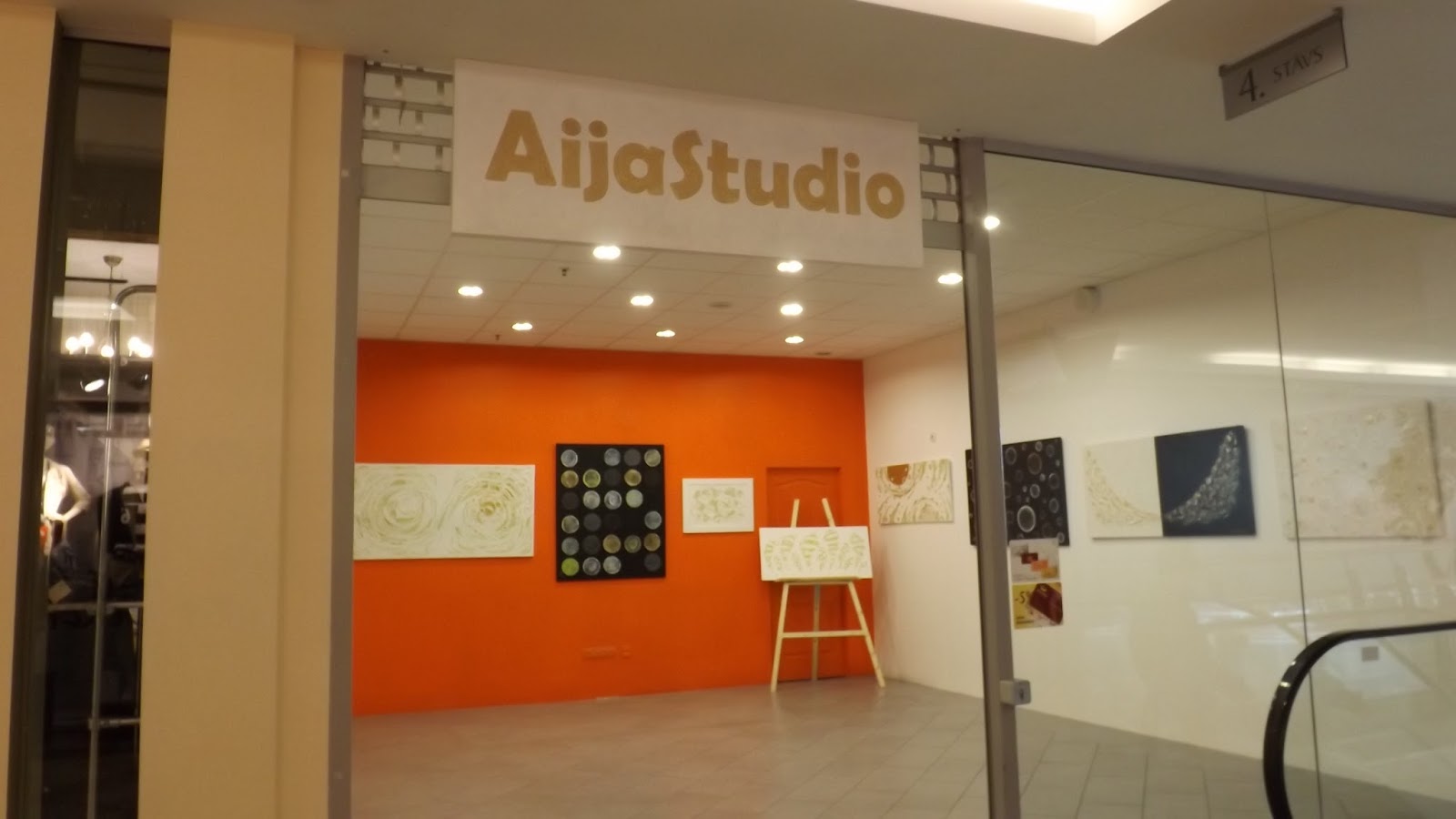
Here, today I have gone to another gallery. One that I noticed randomly while I was walking through the main shopping mall of Valmiera. And that´s an uneasy start.
Set in the fourth and last floor of the shopping mall, surrounded by clothes shops, we can find AijaStudio, a small space, quite small actually. But fine for expose and it fulfils a gallery´s aim which is showing an artist´s work, no matter his/her career or experience. AijaStudio fulfils this aim after all.
But on the other hand there´s that it´s a small space, enough for a single artist exposition, but still small. Worse, the location: a shopping mall. It´s not strange to see galleries or exposition spaces on shopping spaces or similar commercial buildings (notice how many galleries are booming with a bar space as well, to make the ordinary visits more common) but, as I think, are not the best areas. Still, it can give the chance to unexpected people (like it has happened to me) to find out a singular space in his/her routine: you are buying clothes for the next season and then the next area it´s a gallery of art! unexpected, isn´t it?
Keeping with the location, which is the main problem and after all, it´s why this article is written; the gallery it´s in the fourth floor of the shopping mall, the last floor! so it´s not a place that you will find in the first sight you make in the mall. This leads to a more troublesome thing, as it can be completely unknown for many people who ignores the existence of another artistic space in the town...in a never suspected place such the core of the main shooping mall.


There´s not too much to offer but perphaps moving the gallery to the ground level of the shopping mall rather than in the deep fourth level, I suggest. Or could be also marked somewhere about the existence of the gallery: such in those signs in the shopping mall right in the stairs where you can see what´s in the next level. At least that. So the gallery is not so forgotten and ignored (which I believe it is).
The good thing, is that being in a shopping mall with all access avaliable, you have working lifts and mechanic stairs working all time, so the physical accesibility it´s the least of the problems in this case.


Wednesday, 6 January 2016

Reports: "Ledus pagrabs" gallery

We go back with a new report in another cultural building on Valmiera!
This time is the turn of "Leduspagrab", which unbeknown for me, it´s Gymnasium´s art gallery.
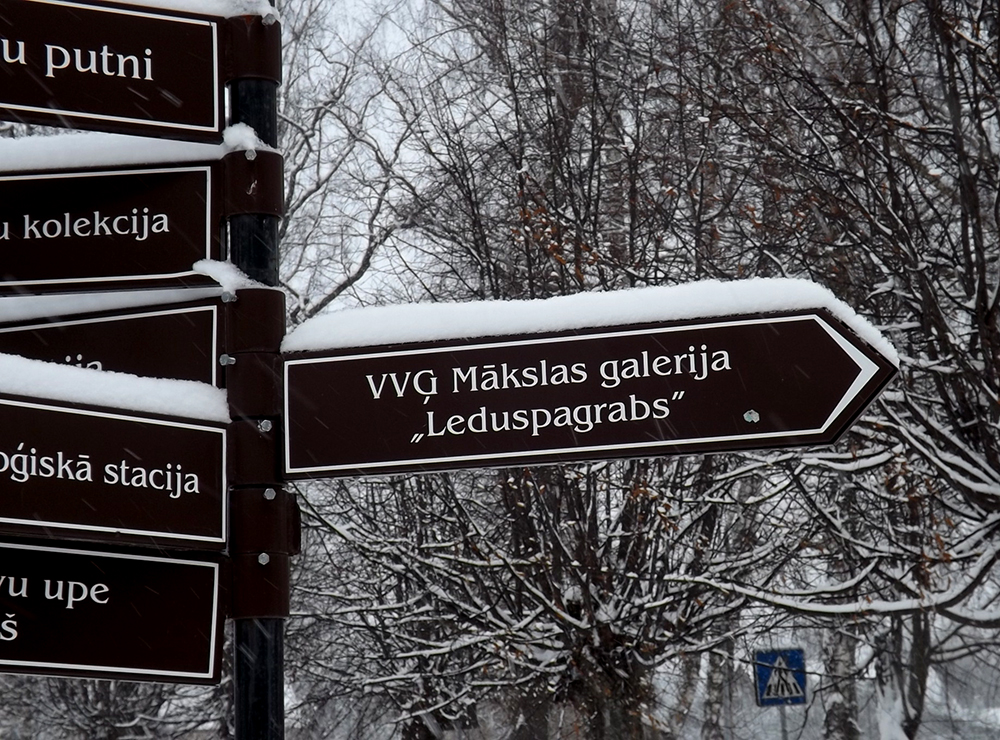
Heading to the coordinates I received to locate the place I found the first and only sign that indicates where the gallery is. It´s not a very precisse road sign, actually; because, I don´t know it was because it was snowing and you couldn´t see the road or that I´m not very clever but I wasn´t able to find the building thanks to that road sign...and the surprise it was that the gallery was just at the other sidewalk.
The only place where you will see "Leduspagrabs" aside in the gallery itself....
...and the thing is that it´s the building at the other side of the street.

Supposedly the gallery was open from 9:00 to 14:00 but I got another suprise (or maybe I got wrong information): it was closed. No, I wasn´t late, it was 12:00.
What was this? I was looking for the place, after walking and finding out in every building following the arrow that road sign pointed but nothing. Then, I finally realised that that yellow building which looks like a modern-day-civilian-adapted bunker was actually the gallery I was looking for. How I was able to find it out? getting close, veeery close:
And I say "veeery close" because its main sign plate (this you see in the photo) was small, hided due the protection ceiling in the entrance and, worst of all, it was a bit gaunt (or probably it was frozen and the scratchs were actually traces of ice).
But then, as I said, it was closed:
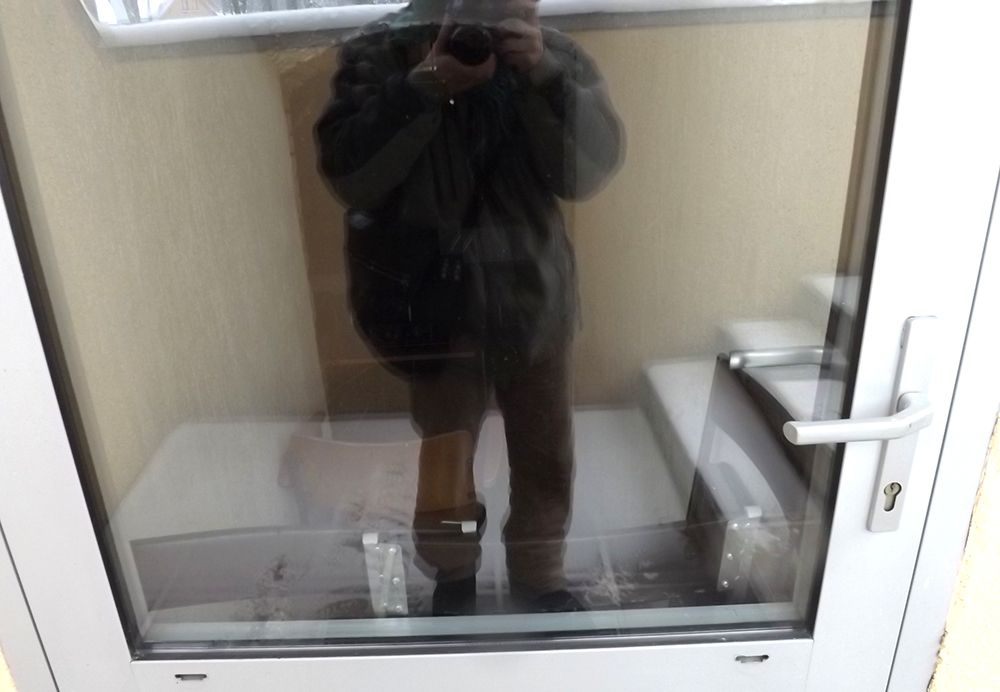
The door is closed. And reinforced with chairs on the other side.
But, luckily, I found another door, which actually was the main door, not the previous one. The thing I want to point here is that the "other" door (the first one I tried and you can see in the photo) was the closest to street and the easiest to access while the other one was the closest to access if you come from the gymnasium. Anyway, it wasn´t anything aesthetic as both doors were equal in size and style. But I think the first door would be better to be open as people who comes from street realise easily that the gallery is open. 
But doors are not important when you find the next surprise which is that actually the gallery HAS NOT opening hours. Probably it had in the past and that was why I had wrong information. I entered then in the gymnasium as probably I would find out the answer of all this, then I went to the gymnasium´s janitor asking about the gallery and he, kindly and in good english, told me that they don´t leave open the gallery and I´ve got to ask them if I want to visit it. 
The reason why the gallery was closed is that not many people come to visit the gallery so they keep it locked.
This was curious, indeed, I thought that probably was also to prevent vandalism as well (the gallery is part of a high school after all) aside of the low public receiving. Anyway, it´s actually fuzzy as if you want to visit the gallery without knowing very clearly how to access you will probably give-up and leave it for another time.
However, I thought that probably on opening exhibitions the gallery reamins open for some event like that. But as I entered in the gallery thanks to a teacher who didn´t speak english I found myself with works which were even 5 years old:


This age of works could mean that they don´t put too often art works. Anyway, this gallery made the purpose to show the art works of some of the gymnasium´s students. The infrastructure and the interior of the building was gorgeous, I liked the stone wall and the circular passage where the works were. This was the best part of the gallery, I could say: the installation was good and enough attractive.
But sadly, to enter there you first find this part of the building:
The lobby room (the first place you find when you enter in a building) was split in two rooms which probably were used for activities too, who knows, but it differed from the rock wall part of the building; this one was more simple.
But the interior of the building wasn´t bad at all actually!...well, except for...

...the book visits (book in the right part of the photo)! No, not that but actually if you check this photo carefully you will see that the gas and water installations are completely at sight of anyone in the middle of the corridor part of the gallery. Not a very good thing for having guests around and gives the impression of a storage rather than a gallery. It would be better to have these installations in that other corner empty room I saw or, better, keep them hided thanks to some kind of stairs wall. This was the improvable part of the inner side of the building...oh! and that someone forgot to close the tap!


And this was "Leduspagrabs". The inside was good, small and simple but good if we consider that it´s a gallery from a gymnasium...with its own building!
But the problem was to find out the place in all the gymnasium´s structure and, in general, reach the gallery. I could say that a good solution would be to put the entrance title name bigger or clearer, or put another sign like the road sing one in the entry or stick to the building which says "Leduspagrabs galerija". The worst part however was entering there without being part of the gymnasium stuff, how you could enter there seeing that everything is closed and there´s no indications about what to do nor timetable avaliable? I think that the solution (a very simple one) would be sticking some simple papers in the entrance glass´ with the description, like "on the other door" (with a right narrow, this would go for the door I found locked and with chairs in the other side) and in the main entrance with another simple paper with would say something like "to enter ask the gymnasium´s janitor or art teacher" and the timetable...and even some events calendar if they organize something. And then the access would be much easier I think. Because otherwise, a visitor will find him/herself with everything closed and thinking that he/she came in the wrong time, giving back to the building.
This would be the solution for everyone. Now for foreign would be just adding translated version of those writtings.


PS. Looks like the spanish culture it´s more in the mind of people that I expected. That´s very good for me.


Thursday, 10 December 2015

Reports: "Laipa Gallery"

Before start talking about this gallery I should start about the experiences I have walking and walking in other galleries, being on Latvia or another country. The first thing is that average galleries are usually humble and small, where they can host as maximum two exhibitions at the same time. Other thing I should add is that gallery´s space is usually a renewed building which served before for another purpose.
With this, I want to add that Laipa gallery was a very well standard gallery and it doesn´t have anything to envy from other ones I have visited, for example, on Riga or other bigger cities. Laipa gallery is, in fact, a good gallery considering it´s in a small town...well, at least not a very big one.
The first impression I got it is the building looks like a furniture shop rather than a gallery; on my first time I walked through this street I even didn´t notice there was a gallery or that building was actually a gallery. Probably due the “art gallery” description it´s a bit too small against the Wall, as we can see in the following photo:


This was probably the biggest hándicap. Once inside there was a curious impression: half of the gallery is the “gallery” itself: the space which hosts art works of the present artist; this space also hosts several old paintings from 2009 that are still there:

The current exhibition...

..and the veteran paintings.

But then, the other half part of the gallery is not precisely a hosting piece of works...well, yes, I saw considerable amounts of works stranded on boxes and corners. But the interesting part is that this other half is most likely a shop. Well, about this I have a dilemma: for one hand, a gallery must attend the artist´s exhibitions and works; galleries serve for this purpose, to show artists´ works; putting another role in the same building makes the gallery outcast and poorer in level. But on the other hand when I saw this part of the gallery and its position (you need to pass slightly through it to head into the gallery space) I remembered that most of the museums always have a “gift shop” section, aren´t they? not to mention that Laipa´s shop sells mostly design stuff or at least cultural settings such pieces for musical instruments:


In short, I´m saying that having a mid-chaotic and varied “gift” shop in a gallery it´s something that could ward off from the gallery´s main intentions in the world of culture...or could give a close picture about the main´s current space of art: the museums, which they have a commercial space in most of them. And as I said, Laipa´s shop doesn´t sell something foreign from the cultural fluff, as I saw, aside of t-shirts, hand-made earings with latvian motives, rings and wristbands with latvian simbology and postcards from an artist (guess that these postcards were made by the artist himself, thought).
  I talked with the gallery´s warden there and she told me that the building hosts free time art classes too, seemingly art classes for third age people as I briefly heard. I asked this expecting that some art materials were for sale too, but sadly they were materials for the gallery´s pupils. Would be good that, having the gallery their own shop, sell art materials too; it would be interesting and different because not many museums sells painting materials on their own souvenir´s shop:


I could say again the setback of the idiom. But actually the gallery hadn´t too many writings on it. The warden/receptionist was able to speak english with me very correctly and well too. The exhibition didn´t have anything in english however, but as long as I know about a gallery´s function, this part is more a problem of the hosting artist him/herself rather than a problem of the gallery: this means, that an artist who wants to put some of his/her work in a gallery he/she will be responsible in how and what will put on it, including explanations and selling banners; gallery will support and assist at this job but is the artist who can have the final word. Of course “Laipa” could always recommend to artists who are interested in exhibit their works there to write his/her main story in english. This, for example, could have happened when explaining the current exhibition, where the definition is only in latvian:


Book of dedications for the artist.

Reports: "Valmieras Muzejs"

Here´s a new section in the blog. This section, Vizeme reports, will talk about several cultural and art spaces across Vidzeme region (and probably all Latvia) and the experience taken from them, how are they for accesibility, specially for foreign people such my case. It´s not a critic section but a way to talk and give ideas to improve the cultural spaces of the country and give a good face from it, face that it´s completely unknown from people outside the region and of course outside the country.


I´ll begin this report about the first thing that concerns and it´s its accessibility to non-speaking latvian people. Warn that this is a point of view, a personal testimony about the place in question and my ends are trying to give an improvement of the facility fr everyone and spread the place to everyone as well not to criticize the place, never.
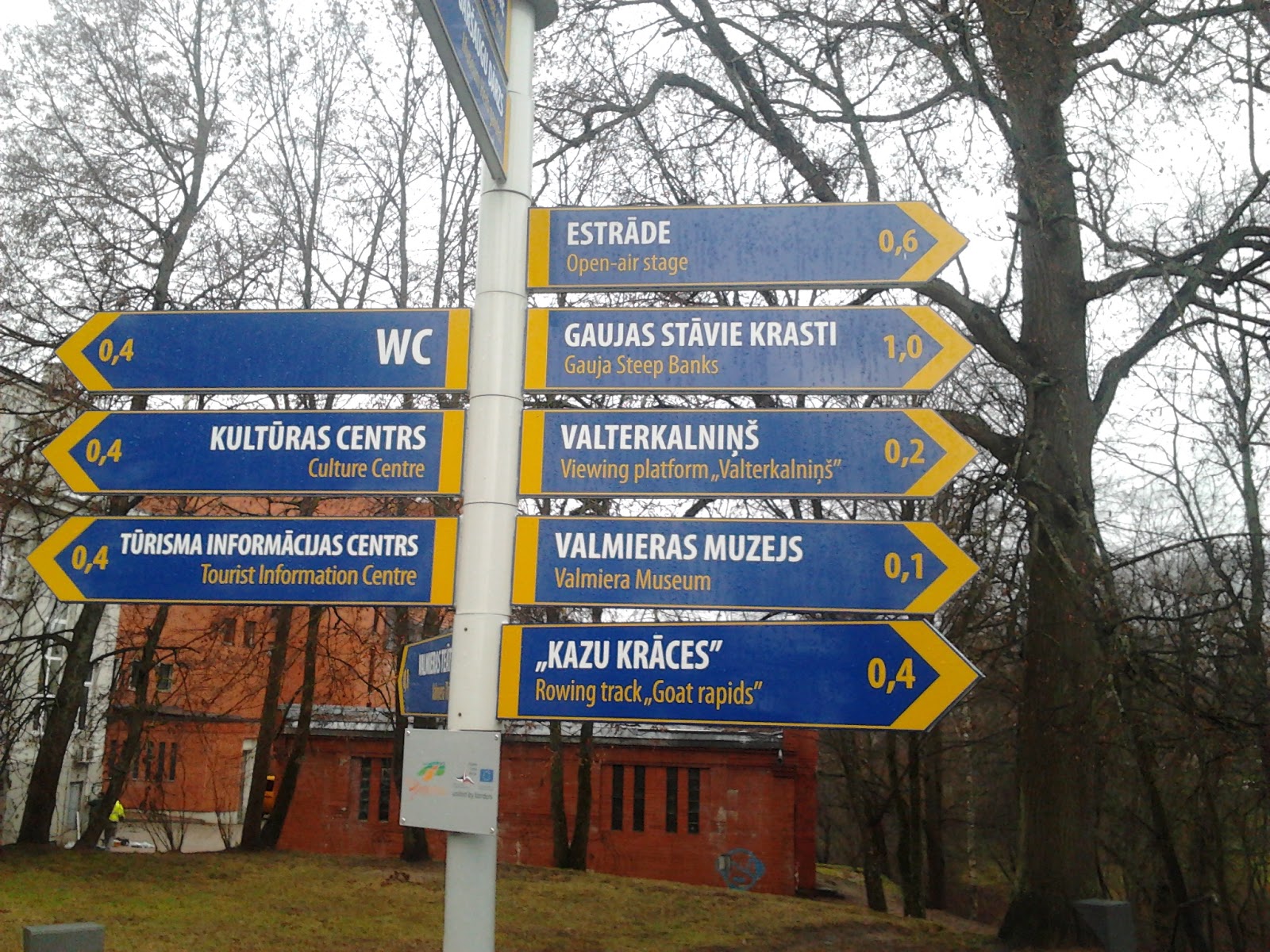
Starting with the language accessibility, several things prevailed against others: outside, the road signs and ther announcements have an english written aside of the latvian one as we can see in the following images:

As we know and look around the city, these road signs are all across the town, they are not exclusive from the museum and probably not planned from the museum as well.
Althought, once inside the “museum territory” (let´s call like this the part which is the museum and the surrounding area that ends until the ancient walls of the town) we can see some indications which are translated into english too:


An interesting project I never could imagine happen of collaboration in between russian an european-arm part.

Things change when arriving at the museum´s main building, where the temporal exhibitions are located. Should note the most important one: for the exhibitions and explaining each work and each hall, all of it, was purely on latvian; no english versión of it (nor russian as well, althought this is something more surprising rather tan inconvenient). This is said, but it was hard to actually understand most of the three exhibitions´ background due the legend and description was in just one language. It´s a pity, because all the texts were long with surely a lot of details that one couldn´t just notice just watching:


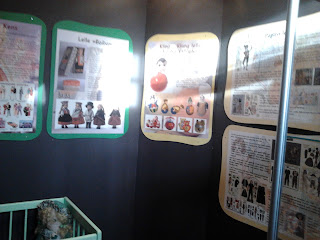
Here we can appreciate several texts of two of the current exhibitions: one about public transport in Valmiera and another about toys and children´s table games where it´s explained at detail the story and background of the exhibitions, but it´s everything in latvian. For the other exhibition there are no detail potos due it is an art exhibition where only the name of the artista and year of the work is marked, with no intro-story or biography included.


Gift shop also completely in latvian. The important information (such timetable), however, is kept in a way which can be understandable by most of people regardless their idiom: by iconographic signs.

Only latvian idiom on the exhibitions was probably the main setback of the infrastructure and organization. But things doesn´t end just here. I asked to the kind receptionist several questions about the museum and what I could get of important information from her was mainly this:
-They dispose of guides, so it´s important for a museum. Unknown, however, if the guide would speak more fluently english.
-When I entered in the museum she couldn´t gave me change of the money I gave for the ticket fee, at the end she kindly allowed me to enter for free. The lack of change could give in my mind two things: or they have just changed the incoming of benefits or not too many visits are received.
-Should be another note is related with the main “english idiom” problem but the receptionist wasn´t able to speak fluently english and I had to speak in a broken manner with her to arrive on conclusions. This is the reason why I was a bit doubtful about the guide´s skills as well.

Still maintaining with the english fluff. The webpage of the museum is quite complete and exact, serving and answering in most of the questions that one would make when planing to visit a museum. It´s avaliable in a total of five idioms (latvian, estonian, english, German and russian) but at the time one clicks on his/her prefered idiom the interface changes slightly, giving clearly that all the information is written in latvian is somewhat shorter and less dense in english (for example); even worse, interacting with the page in the english version has some mistakes to fix due it is needed to click in a exact path if you want to keep reading in english (or other of the 3 other avaliable idioms) and not being sent to the latvian version. Other sections of the page are just no translated such the “news” section.

Photoshot of Valmiera´s Museum webpage.


Photoshot of the “news” section.

Another note I want top ut it´s that the museum space itself consists in a inclined terrain where people must be cautelous to don´t fall on the hill…but the problem it´s specially for disabled people. I want to note this because in the building itself the elevator for all the floors was serving as the mop bucket´s storage. Very probably the staff of the museum seeing someone disabled would quickly go and withdraw the stuff but I got to mention the access to the other buildings actually: for example, going to the gift´s shop would be hard for a dissabled person due the very inclined stairs on it and I said already about the problema for going to the low part of the hill.

Here are you can see the mop with the elevator locked.

Upper level of the elevator.

So we have put the main setbacks in the museum. But now let´s head to the resolution ideas:
About the idiom. Let´s start for the simplest one solution which we can put in the webpage: take care and translate COMPLETELY the webpage itself, so there´s no wrong links nor mistaken redirections (so if you are reading the english version it doesn´t drive you to the latvian one once you click a hyperlink…unless it´s mandatory). “News” section can be however a bit stressing due it requires often reupdating and then often translating but for example could be enough with just translating the title and putting a small explaining text of one or two lines lenght.
For the physical and infrastructure part things get more challenging but still is possible. Nowadays most temporal exhibitions has an english part. It´s stern to have to do it with so much text as I saw in the exhibitions…however this could be solved just reducing the text format and allowing the english text get inside or putting in another explaining banner the english version of the latvian text. In the upper level exhibition could have been enough for example to translate the latvian intro banner where most of the vital information about the exhibition is (example: just giving in english the biography about the artista kārlis Batgalis and his wave in art), so it could save time and effort. But however for the lower level exhibition (the one which was about table games and children games) and similars the whole texts must be explained due that it was noticed that all the explanation banners were descriptions of EACH of the games…meaning that a foreign person misses most of the reason to understand the purpose of the visit.
It´s only asked for an english translation. Probably most of the foreign visitants are russians or from one of the other baltic countries but english is the most appealed language for international topics so it could put all the nationalities altogether in once.
And finally, for the access to some parts. I noticed that in some parts of Latvia the infrastructure has a well-made adaption for disabled persons. In Riga, for example, many public stairs have a two-sided slide for wheels made of steel in a side of the stairs. With the stairs for the gift shop could be done the same. And about the access to the forest from the upper level of the hill (where the main building museum is) that part could be fixed just changing some broken and uneven stones and a railing for helping some people to go down easily and without problems due the inclination it´s a bit pronounced (I should remind it).

On the other hand I don´t want to leave good points without noticing. The receptionist who atended me, despite the difficulties to talk with her in english she showed herself as someone polite and helpful in all posible. And also, the location of the museum is in the best part of the city, right when the deep Gauja forest begins and creates a small valley, so this location could be taken more in advantage.